The Twenty-Minute Counter Test: How to Judge a Camera by Feel, Not by Spec Sheet
Spec sheets answer a question almost nobody actually asks. Whether a body fires twenty frames per second matters far less than whether it still does anything useful fifteen seconds later, or whether the viewfinder keeps up while the shutter is clattering away.
So here is the argument: skip the brochure demo. Bring a memory card, wear the coat you actually shoot in, and give the camera twenty honest minutes. None of these five tests requires a cooperative salesperson or a rental fee, and every one of them will tell you more than a table of numbers.
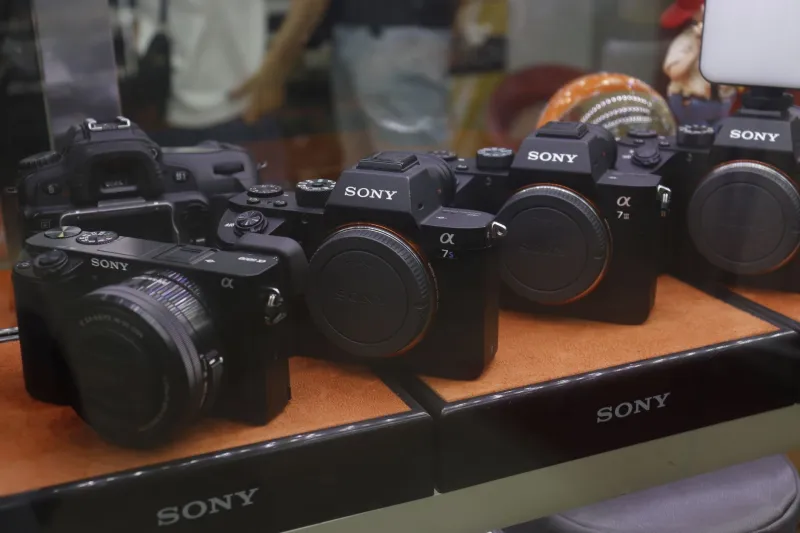
One housekeeping note before you start: ask at the counter. Most US camera stores are perfectly happy to hand over a body if you explain what you are doing — the friction comes from people who grab a demo unit at noon on a Saturday and camp on it for an hour.
Test One: The Dim Corner Autofocus Trial
Every store has a dark corner. Usually it is the aisle with the bin of old point-and-shoots or the display of tripods nobody touches. Carry the camera over there.
Set continuous autofocus with subject detection enabled, then track something moving. A friend you dragged along works. So does a store employee walking the floor, provided you ask first. Kill the AF assist lamp — the entire point is to see how the camera behaves when it has to work with bad light rather than a red beam painting the target for it.
Now count. Not every frame, just a rough hit rate out of ten. The number itself matters less than the pattern. Does it hunt, lock, then lose the subject again? Does it grab a shelf of lens caps instead of the face? Does the tracking box slide off onto a shirt collar?
This is the test that predicts whether you get the indoor birthday shots at ISO 6400. It is also the one budget bodies fail most often while looking heroic on paper.
Test Two: The Buffer Reality Check
Burst specs are quoted as a maximum with no mention of the comedown. Find out for yourself.
Set RAW — not JPEG, not RAW plus JPEG — and the highest burst mode available. Hold the shutter for a full five seconds. Then watch the write light and time how long it takes before you can fire another full-speed burst.
Two things to notice: the length of the wait, and whether the camera turns sluggish in the meantime. Menus crawling, the review button lagging, the whole interface acting like a laptop with forty tabs open. That sluggishness is what you will feel at a wedding during the first dance.
Your card matters enormously here. If the store has a display card in the body, assume it is the cheapest thing the manufacturer could source. Ask to swap in yours. A body that clears in four seconds on a fast card may take fourteen on a slow one, and you want to know which of those numbers describes your actual life.
Test Three: Viewfinder Blackout and Lag
This one you can feel in about ninety seconds, and it is nearly impossible to convey in a spec table.
Look through the viewfinder and pan across the store at a normal walking pace. Does the image smear, stutter, or feel like it is trailing your hands? Now fire a burst and watch how long the screen goes dark between frames. A brief flicker is fine. A hard blackout that leaves you guessing where your subject went is the line between a camera that feels responsive and one that always seems half a beat behind.
Then wave a hand in front of the lens while watching the EVF. If your hand shows up noticeably late, the display is lagging — and that lag makes tracking anything fast feel like guesswork.
Last check: does the viewfinder preview your exposure and white balance accurately, and can you pull up a histogram while shooting? Small feature. Enormous difference on a bright afternoon.
Test Four: Shutter Feel Through Gloves
If you live anywhere with a real winter, this is not a novelty test. Pull on the gloves you actually wear from November through March — the thin liners, the fleece pair, whatever lives in your coat pocket — and shoot a dozen frames.
Can you find the half-press detent? Does the shutter button sit flush with the top plate and vanish under a fingertip? Do the front and rear dials bite into a gloved thumb, or are they smooth metal cylinders that refuse to turn?
While you are there, judge the release weight. Too light and you will fire off accidental frames every time you raise the camera. Too stiff and you will jab at it, which is its own kind of blur.
Test Five: Balance With a Real Lens
Stores love to demo bodies with the smallest kit zoom in the catalog, which makes every camera feel like a featherweight. Mount the biggest lens you realistically plan to use, or your own if the mount matches.
Hold the whole rig one-handed at eye level for thirty seconds. Shoot with it. Then carry it at your side for a minute, the way you actually walk around with a camera. Does your wrist file a complaint? Does the grip fill your palm, or do your fingers curl around a body that was slimmed down purely to look good in a comparison chart?
Balance is not a spec. But balance decides whether the camera comes with you, and a camera left in a drawer loses every comparison ever run.
A Few Notes on Not Being That Customer
Bring your own formatted card and take it with you when you leave. Do not run all five tests on a Saturday afternoon when the store is packed. If a body is tethered to an alarm, work with what you have rather than yanking on it. And if a staffer spends fifteen minutes helping you, buy the card or the strap or the screen protector from them — good counter advice is worth the markup.
Specs tell you what a camera is capable of. Twenty minutes at the counter tells you whether the two of you will get along.