The Used Lens Market Has a Pecking Order — Here's Who Holds Value and Who Sinks
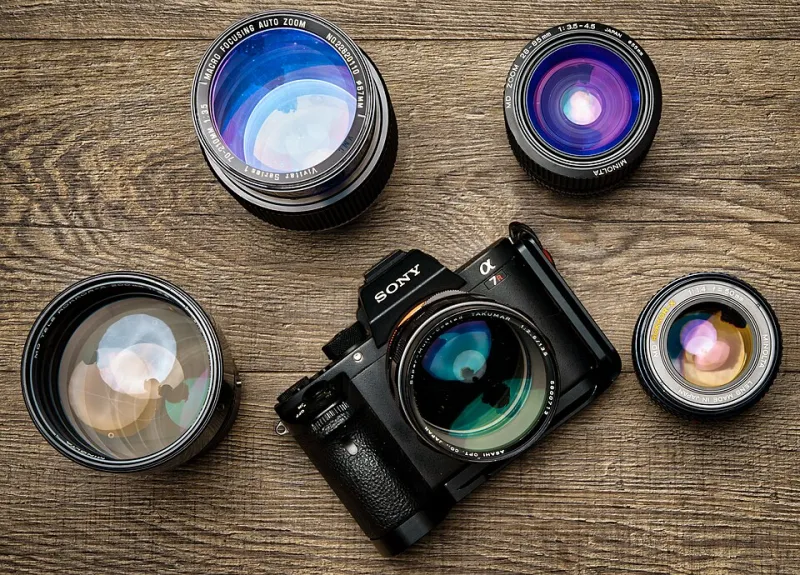
Photo: John Brighenti from Rockville, MD, United States, CC BY 2.0, via Wikimedia Commons
Every lens purchase is really two purchases: the lens, and eventually its exit. And in the US secondhand market — eBay, MPB, KEH, B&H Used, your local Facebook Marketplace — exits vary wildly. Two $1,100 lenses bought the same year can sell for $850 and $250 respectively five years later. The difference isn't luck. It follows patterns.
The Pattern: Native, Popular, Prestigious
Strip away the noise and depreciation comes down to three factors.
Mount relevance. This is the big one since the industry went mirrorless. Lenses in current, native mounts hold value like few consumer products do. A Sony 24-70mm f/2.8 GM or Canon RF 28-70mm f/2 loses shockingly little over five years because demand for native glass is high and supply is limited by price. Meanwhile, DSLR-era glass — the same optical formulas in EF or F mounts — faces a shrinking pool of bodies to put it on. Prices reflect that.
The 50mm and 35mm f/1.8 effect. Fast fifties and normal-range primes are the gateway lens for nearly every new photographer. That means enormous used supply. A first-party 50mm f/1.8 that retails around $200 might fetch $120 used — fine, but there's no investment story there. The flip side: they're cheap to buy used too, which cuts both ways.
Prestige optics. Certain lenses simply don't flood the market. Think the Sony 35mm f/1.4 GM, the RF 85mm f/1.2, Nikon's Z 70-200mm f/2.8, or Fujifilm's 33mm f/1.4. Owners tend to be committed shooters who keep them, and buyers know quality when they see it. These routinely sell used at 70–85% of retail years in.
The Doorstop List
Now the cautionary column:
- Third-party zooms for discontinued mounts. Sigma and Tamron made wonderful glass for DSLRs. Wonderful, and increasingly unwanted. An A-mount or older EF-mount third-party zoom can drop below 20% of retail.
- Superzooms. The 18-200mm class sells new on versatility and sells used on nothing. Everyone who owns one wants the two-lens kit instead.
- Old third-party AF attempts. Early mirrorless-era third-party lenses with sluggish autofocus — some early RF and Z mount adaptations come to mind — depreciate brutally because buyers know firmware support is dicey.
- Kit zooms, always. The 18-55mm is the most manufactured lens in history. Its used price is essentially a rounding error.
Buying Smart: Buy the Depreciation, Not the Hype
The strategy writes itself. If you want value, buy glass after it depreciates — the previous-generation f/2.8 zooms from first-party brands are the sweet spot, especially in adapted or DSLR mounts if you still shoot those bodies. You absorb someone else's loss and get 95% of the optical performance.
If you want an investment-grade purchase, buy native, buy the good stuff, and buy what's in demand: fast primes in current mounts, first-party f/2.8 zooms, and anything Fujifilm makes with a red badge — Fuji's used market stays stubbornly strong in the US.
Selling Smart: Timing Beats Patience
When it's time to sell, three rules. First, sell into demand windows: January (new year resolution buyers), tax-refund season, and the weeks before major camera announcements when people hunt for deals. Second, list across platforms — MPB and KEH trade convenience for cash, eBay maximizes return if you handle shipping carefully. Third, be honest about condition; dust specks and honest photos of the actual lens beat stock images and disappointment every time.
The uncomfortable truth about lenses is that most of them are consumer goods, not assets. But the market isn't random. Buy native glass in healthy mounts, avoid the zoom-everything category, and treat prestige primes like the semi-liquid assets they are — and the exit won't sting nearly as much as it could.