The 'Just in Case' Bag Is Killing Your Photography: A Three-Step Purge
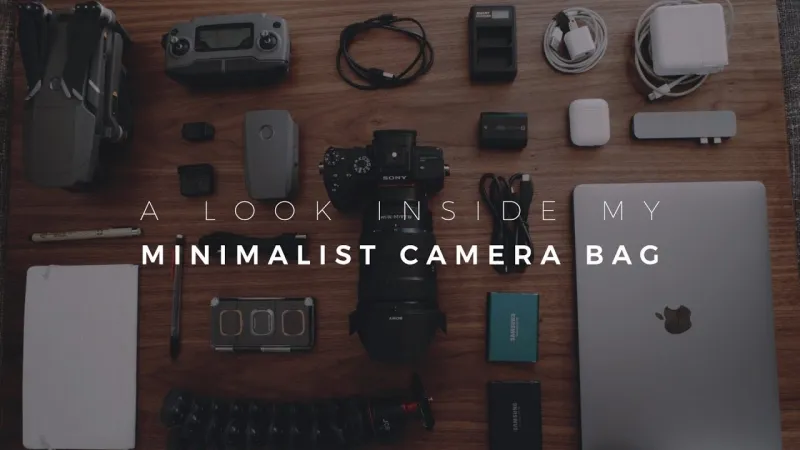
Photo: minimalist camera bag with single camera and lens on table, via i.ytimg.com
Let's be honest about what's in your camera bag right now.
There's the 70-200mm you've used twice since buying it. The backup body that's never been a backup because the primary never failed. Three lenses that overlap in focal length by 80%. A flash you keep meaning to learn. The whole thing weighs eleven pounds and you've started leaving it in the car, which means you're missing shots not because you lack gear, but because you have too much of it.
This is the 'just in case' mentality, and it's the most expensive habit in photography.
The Real Cost of Carrying Everything
Run the numbers on a typical enthusiast kit: a full-frame body, three zooms, a prime, a flash, a tripod, and the usual accouterments. That's roughly $6,500 in gear and somewhere north of fifteen pounds on your shoulder.
Now here's the kicker — most photographers use two of those items for 95% of their shots. Look at your Lightroom catalog. Sort by lens. The data doesn't lie, and it's never flattering.
The hidden cost isn't just money or shoulder pain. It's decision fatigue. Every time you open a bag with seven options, you spend thirty seconds deciding instead of shooting. The bird lands, the light shifts, the moment passes while you're weighing whether the 24-70 or the 35mm prime is right. A bag with two lenses makes that decision for you — and a made decision is a captured photograph.
Step One: The 90-Day Audit
Before you sell anything, get the facts. Go through the last three months of images and count frames per lens and per body. Be strict about it — count what you actually delivered, not what you tinkered with.
Whatever falls below 5% of your keepers goes into the 'probation pile.' Don't sell it yet. Put it in a drawer. If you don't open that drawer in 90 days, the case for keeping it is officially closed. This removes the anxiety from decluttering — nothing is lost forever, you're just testing the hypothesis that you don't need it.
In my own audit, the results were brutal. My beloved 24-105mm had shot 8% of keepers. The 35mm f/1.8 shot 61%. Two bodies, one used. The drawer is still closed.
Step Two: The Two-Lens Rule
Here's the framework that replaced my eleven-pound bag: one zoom for flexibility, one prime for intent. That's it.
For most people, that means a standard zoom (24-70mm equivalent) paired with a fast 35mm or 50mm prime. The zoom handles the unpredictable stuff — travel, events, run-and-gun street work. The prime handles everything where you already know what you want, because committing to a fixed focal length changes how you see. You zoom with your feet. You compose before you raise the camera.
The weight math is almost comical: the two-lens kit runs about 3.5 pounds versus 15. The cost math is better — selling the redundant gear typically funds a genuinely excellent prime, or a trip to actually use it. I put $1,900 back in my pocket from a purge, which bought a used 85mm and a weekend in Sedona that produced more keepers than the previous six months combined.
Step Three: Redefine 'Just in Case'
The purge isn't about deprivation — it's about redefining what backup means. Your phone is your just-in-case camera now. It's better than any backup body you'd carry, it's already in your pocket, and it handles the 1% scenario better than a second kit would.
Same logic for accessories. You don't need three filters; you need the one polarizer that earns its slot. You don't need a flash 'in case the light is bad' — bad light is where you learn to see. Constraint isn't the enemy of creativity; it's the mechanism of it.
The photographers whose work you admire aren't carrying more than you. They're carrying less, and using it better. The bag gets lighter. The decisions get faster. The shots — and this is the part nobody believes until they try it — get better too.
Empty the drawer. Sell the overlap. Your shoulders will notice by Friday, and your portfolio will notice by summer.