Steady Does It? The Surprising Ways Your Tripod Is Actually Blurring Your Shots
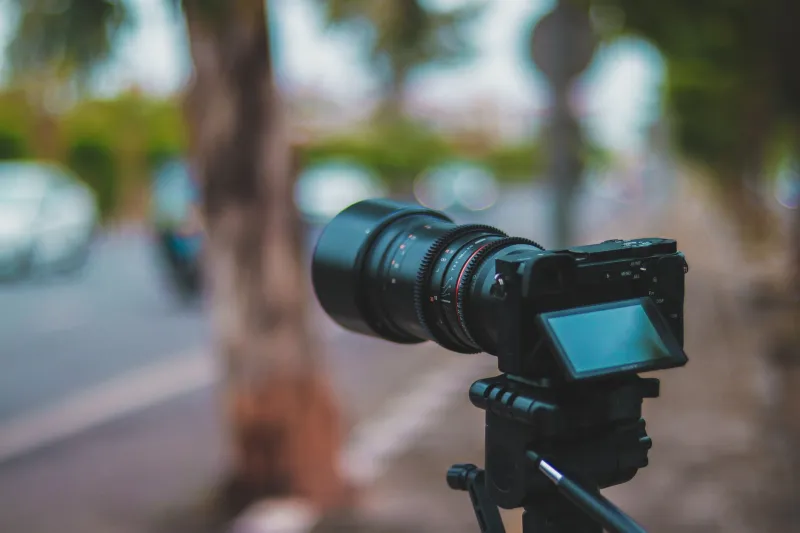
Here's a scenario that plays out in photography forums every single week: someone posts a landscape shot and complains it looks soft. They used a tripod. They used a remote shutter release. They waited for calm air. And yet — blurry. The usual suspects get blamed: bad technique, a cheap lens, front-focus issues. But nobody asks the uncomfortable question. What if the tripod itself is the problem?
This isn't a fringe theory. It's a well-documented phenomenon, and it catches photographers off guard precisely because a tripod feels like the responsible, grown-up choice. You've been told to use one. You saved up for one. So it must be helping. Right?
Not always.
The Resonance Problem Nobody Talks About
Every physical object has a natural resonant frequency — the rate at which it vibrates when energy is introduced. Your tripod is no different. Carbon fiber and aluminum both have resonant frequencies, and when something disturbs them — wind, a passing car, footsteps on a wooden deck, the mechanical action of your shutter — they vibrate at that frequency until the energy dissipates.
The problem is timing. If your shutter opens right as that vibration is at its peak amplitude, you've got motion blur baked directly into your image. And here's the kicker: handheld shooters don't have this issue in the same way. Your body acts as a natural damper. Muscle, fat, and tissue absorb and scatter vibration instead of channeling it into a resonant column of metal pointed directly at your sensor.
This is especially brutal at mid-range shutter speeds — roughly 1/15s to 1/2s — where the exposure is long enough to capture vibration but short enough that you're not averaging it out. Landscape photographers who bracket exposures at dusk often see this exact pattern: the fastest and slowest shots are sharp, and the middle ones are soft. Classic resonance signature.
Mirror Slap Is Still Real, Even on Mirrorless-Adjacent Bodies
DSLRs have mirror lockup for a reason. When the mirror flips up before the shutter fires, it sends a shockwave through the camera body. On a tripod, that energy has nowhere to go — it travels straight down the head, into the legs, and bounces back up just in time to meet your open shutter.
Mirrorless shooters aren't completely immune either. Electronic first curtain shutter (EFCS) modes can introduce their own subtle vibration artifacts at certain speeds, and mechanical shutters still create movement. The window of vulnerability is narrower, but it exists.
For DSLR users, mirror lockup combined with a two-second self-timer delay is the classic fix. But a lot of photographers enable mirror lockup and still skip the delay — which means they're triggering the shutter right as the lockup vibration is still working its way through the system. You need both. The two-second gap lets the tripod settle.
Your Tripod Head Might Be the Weak Link
People agonize over tripod legs and often treat the head as an afterthought. That's backwards. A mediocre head on great legs will underperform every time. Ball heads, in particular, can introduce micro-movement if the locking tension isn't dialed in correctly. Too loose and the camera drifts. Too tight and you've pre-loaded tension into the system that releases the moment you touch the shutter button.
Pan-tilt heads are more predictable for static shooting because you can lock each axis independently, but they're slower to work with. The real answer is learning your specific head's sweet spot for tension — which takes time and experimentation, not just reading a spec sheet.
Also worth checking: the quick-release plate. Cheap QR plates have play in them. That tiny amount of wobble is amplified the longer your lens is and the tighter you're cropped. Telephoto shooters on bargain plates are essentially building instability into every frame.
When Handheld Actually Wins
There are shutter speed ranges where handheld is genuinely competitive with — or better than — a tripod for certain photographers. Modern in-body image stabilization (IBIS) systems from Sony, Nikon, and OM System can compensate for 5 to 8 stops of camera shake. At 1/30s on a 50mm lens, a skilled shooter with good IBIS is often sharper than someone on a poorly-set-up tripod dealing with wind or surface vibration.
Event photographers, street shooters, and documentary photographers have known this intuitively for years. The tripod introduces workflow friction and setup time, and in dynamic situations, that hesitation costs you the shot entirely. A sharp image at 1/60s handheld beats a soft image at 1/8s on a shaky tripod every time.
This isn't an argument against tripods — it's an argument for knowing when they actually earn their keep.
Getting Honest Results From Your Setup
If you want to actually test whether your tripod is helping or hurting, run this comparison on a calm day with no wind. Set up your tripod with your usual settings and shoot a high-contrast static target at several shutter speeds between 1/30s and 1 second. Then shoot the same target handheld at the same speeds. Pixel-peep both sets at 100%.
You might be surprised what you find. A lot of photographers who do this test discover their handheld keeper rate at 1/60s rivals or beats their tripod results at 1/15s — especially if they haven't been using mirror lockup or a shutter delay.
A few habits that genuinely help when you do use a tripod:
- Hang your camera bag from the center column hook to lower the center of gravity and add damping mass
- Don't extend the center column unless you have to — it's the least stable part of the whole system
- Use electronic shutter if your camera supports it, to eliminate mechanical shutter vibration entirely
- Step away from the tripod when the shutter fires — even your breathing transfers through the legs if you're touching them
- Check your tripod feet — rubber feet on smooth surfaces can slide; spiked feet outdoors are worth having
The Expensive Tripod Trap
Here's the final counterintuitive twist: expensive tripods can actually make this problem worse for some shooters. High-end carbon fiber legs are incredibly stiff, which makes them efficient transmitters of vibration rather than absorbers of it. That stiffness is an advantage in many situations, but it means any vibration that enters the system travels through it cleanly instead of getting damped out.
Cheaper, slightly flexy aluminum legs actually absorb and scatter some of that energy. It's not a recommendation to buy cheap gear — but it is a reminder that more money doesn't automatically mean sharper images. Understanding your gear and your environment matters more than the price tag.
A tripod is still one of the best investments you can make as a photographer. But like any tool, it only works when you understand what it actually does — and what it doesn't.