Why Your Camera's Grip Is Quietly Ruining Your Photos

You've pixel-peeped at sensor comparisons. You've watched every lens review on YouTube. You've debated whether that extra stop of dynamic range is worth the upgrade. But here's a question most photographers never seriously ask: does your camera actually fit your hand?
It sounds almost too simple to matter. It isn't.
Grip design, weight distribution, and physical ergonomics are quietly affecting your image quality in ways that no spec sheet will ever tell you. Let's break down exactly how.
The Sharpness Problem Nobody Talks About
Camera shake is the silent killer of sharp images. Most photographers blame their shutter speed or their lens's stabilization system when they get soft shots—but hand fatigue is often the real culprit.
When your grip is too shallow, too narrow, or just awkwardly shaped for your hand size, your fingers compensate by tensing up in unnatural positions. After thirty minutes of shooting, that tension translates into micro-movements at the moment of exposure. You're not imagining the soft shots at the end of a long session. Your hands are literally less stable.
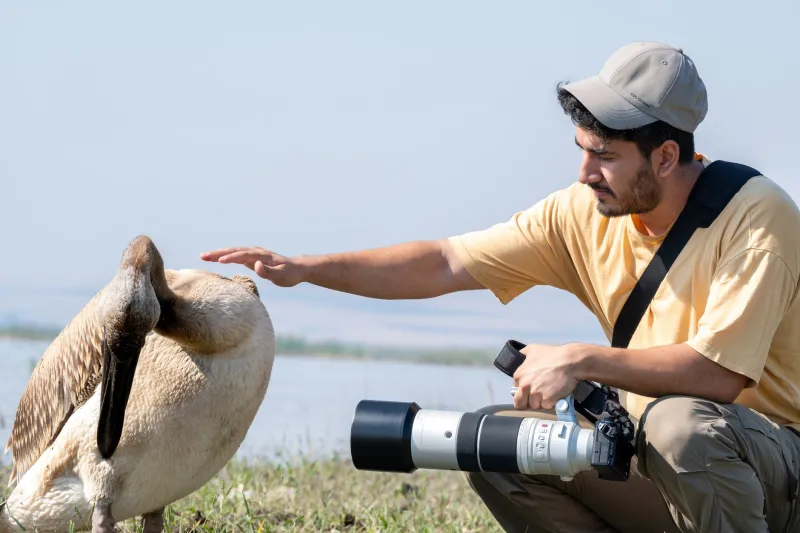
This is especially pronounced when shooting with longer telephoto lenses or when you're working handheld in low light at slower shutter speeds. A camera that sits securely in your palm—where the grip depth matches your finger length and the shutter button falls naturally under your index finger—lets you maintain a relaxed, stable hold. Relaxed hands shake less. Less shake means sharper images.
Weight Distribution Is a Bigger Deal Than Total Weight
Here's something counterintuitive: a heavier camera can actually be easier to shoot with than a lighter one, depending on how that weight is distributed.
A body-heavy camera with a large lens attached puts strain on your wrist and forces you to grip tighter to compensate. A camera with a well-balanced weight distribution—where the center of gravity sits close to your palm rather than out at the lens—feels significantly more controlled, even if it's technically heavier on a scale.
This matters practically when you're shooting events, weddings, street photography, or any situation where you're raising and lowering the camera hundreds of times over several hours. Poor balance accelerates fatigue. And fatigue kills your ability to react quickly, nail focus, and frame decisively.
Some mirrorless systems have taken heat for being body-light but lens-heavy, creating an imbalanced rig that punishes your wrist on long shoots. If you've ever felt that nagging ache on the right side of your wrist after a full day out, you've already experienced this firsthand.
How Grip Depth Affects Your Composition Choices
This one's subtle but real. When your camera grip doesn't feel secure, you subconsciously play it safe.
You stay at eye level because shooting from low angles or overhead feels unstable. You avoid one-handed grabs for quick candid shots because you don't trust the hold. You hesitate on vertical compositions because rotating the camera feels awkward and unsteady.
A deep, well-contoured grip—the kind you find on prosumer DSLRs and higher-end mirrorless bodies—actually expands your compositional range by making unconventional angles feel manageable. When you trust the camera in your hand, you move more freely with it.
This is one of the underrated reasons many photographers who switch to smaller, compact mirrorless systems eventually add a grip extension or third-party cage. It's not just about comfort. It's about confidence.
All-Day Shooting: The Real Endurance Test
Consider a typical wedding day—eight to ten hours of shooting, constantly moving between indoor and outdoor environments, alternating between wide compositions and tight portraits. Or a wildlife session in a national park where you're hiking with your gear before you even start shooting.
In these real-world scenarios, the difference between a camera that fits your hand and one that doesn't becomes enormous. Cramped fingers affect your ability to quickly access dials and buttons. A sore wrist slows your reaction time. Neck and shoulder strain from fighting an unbalanced rig compounds across hours.
Many photographers dismiss this as a toughness issue—just push through it. But it's actually a creative issue. When you're physically uncomfortable, you stop experimenting. You shoot conservatively. You start wrapping up earlier than you should. The camera's ergonomics are directly limiting what you're willing to try.
What to Actually Look For Before You Buy
If you're shopping for a new body, here's how to evaluate grip ergonomics before you commit:
Handle the camera in-store with your actual shooting lens attached. A grip that feels fine with just the body can feel completely different with a 24-70mm f/2.8 mounted. Most camera stores will let you try this—ask.
Check the grip depth against your hand size. If you have larger hands, shallow mirrorless grips may force your middle finger to press against the lens mount. This is uncomfortable and reduces stability.
Test the shutter button position. Your index finger should rest naturally on the shutter without having to shift your grip. If you're stretching or rotating your wrist to reach it, that's a long-day problem.
Notice where the camera sits when you relax your grip slightly. A well-balanced body stays put. One with poor weight distribution will tip forward.
Consider third-party grip solutions. Battery grips, grip extenders, and L-brackets can meaningfully improve the ergonomics of an otherwise great camera. Don't write off a body just because the stock grip is shallow—solutions exist.
The Bottom Line
Specs matter. Sensors matter. Glass absolutely matters. But the camera you can hold comfortably for eight hours and shoot instinctively will always outperform the technically superior body that wears you out by noon.
Ergonomics isn't a soft preference. It's a performance variable. The next time you're evaluating your kit, put the camera in your hand—really hold it—and ask whether it's working with you or against you. That answer is worth more than most spec comparisons.