Full-Frame FOMO Is Costing You Great Shots: The Real Case for Crop Sensor Cameras
Let's be honest: somewhere along the way, "full-frame" became less of a technical specification and more of a status symbol. Forum threads, YouTube comment sections, camera store conversations—they're all full of the same implied message. If you're not shooting full-frame, you're shooting second-best. That's a narrative worth pushing back on hard, because for a huge percentage of photographers out there, it's just flat-out wrong.
Crop sensor cameras—APS-C bodies from Sony, Fujifilm, Canon, and Nikon, or Micro Four Thirds systems from Olympus and Panasonic—are genuinely excellent tools. Not "pretty good for the price." Not "fine if you're just starting out." Actually excellent. And in certain shooting situations, they have measurable, real-world advantages over their full-frame counterparts. Let's dig into why.
First, What Does "Crop Factor" Actually Mean?
When people talk about crop factor, they're referring to the ratio between a full-frame sensor (roughly 36mm x 24mm, matching old 35mm film) and a smaller sensor. A typical APS-C sensor has a crop factor of around 1.5x to 1.6x depending on the manufacturer. Micro Four Thirds sensors come in at about 2x.
What that means practically: when you mount a 200mm lens on an APS-C body, it behaves like a 300mm lens would on a full-frame camera in terms of field of view. That's not a bug. For a lot of photographers, that's the whole point.
The sensor isn't literally cropping your image in a damaging way—it's capturing a narrower slice of what the lens projects, which translates to a tighter, more zoomed-in perspective. Same number of pixels on a smaller area also means higher pixel density, which becomes relevant in ways people don't talk about enough.
The Wildlife and Sports Case Is Almost Unfair
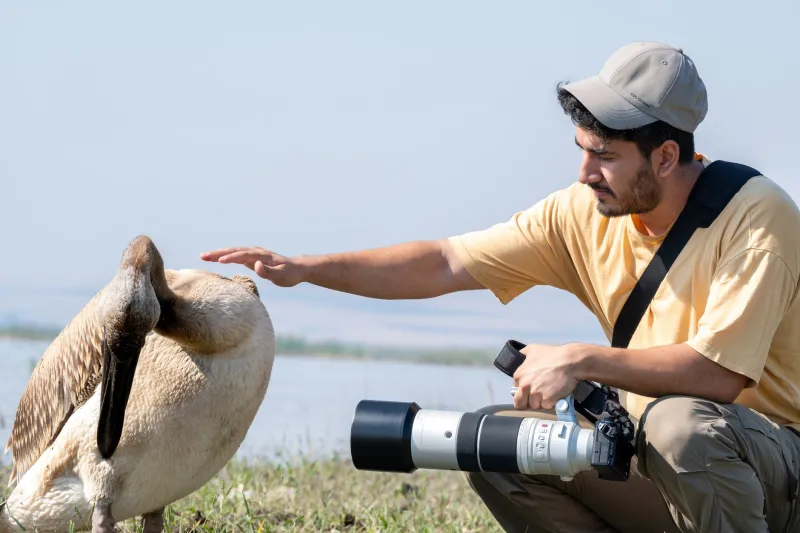
If you're shooting birds in flight over a Texas wetland or tracking a running back through a crowd at a Friday night high school game, reach matters enormously. And reach is exactly where crop sensors shine.
Consider this: a 500mm lens on a full-frame body gives you 500mm of effective reach. Put that same lens on an APS-C body, and you're suddenly working with the equivalent of 750mm. That's a massive difference when your subject is 200 yards away and not getting any closer.
Now think about what that means for your wallet. A 600mm full-frame prime from a major manufacturer can run anywhere from $10,000 to $14,000. A 150-600mm zoom paired with a solid APS-C body? You're looking at a fraction of that cost, and you're getting more effective reach on the long end. Wildlife photographers who've made the switch often describe it as the most efficient gear decision they ever made.
Sports photographers benefit from the same logic. Tight framing on fast-moving subjects, more reach from the sidelines, and the ability to use more affordable telephoto glass without sacrificing the angle of view they need—crop sensors deliver all of that.
Travel Photography: Size and Weight Are Features, Not Trade-Offs
Here's a scenario a lot of American travelers know well: you're flying into Denver for a hiking trip, and you want to document everything from mountain landscapes to close-up wildflower shots. What goes in the bag?
Full-frame systems are heavy. The bodies are larger, the lenses designed for them are larger (because the image circle they need to project is bigger), and the whole kit adds up fast. Airline carry-on limits, aching shoulders on a six-mile trail—these are real constraints that affect what shots you actually get.
A Fujifilm X-T5 or a Sony a6700 with a couple of compact APS-C lenses? That kit fits in a small shoulder bag, weighs a couple of pounds, and delivers image quality that most people—including clients—genuinely cannot distinguish from full-frame output in typical viewing conditions. When the camera that's actually with you beats the camera sitting in a hotel room because it was too heavy to justify, that's a practical win that specs on paper can't capture.
The Pixel Density Argument Nobody Talks About
Here's where it gets a little more technical, but stick with it—it's worth understanding.
Modern APS-C cameras are packing serious megapixel counts into smaller sensor areas. The Fujifilm X-T5 has 40 megapixels on an APS-C sensor. That means each individual pixel is covering a smaller area of the sensor, which translates to more detail per degree of field of view when you're shooting telephoto.
When you're photographing a distant bird or a faraway player on a field, you're not filling the frame with your subject—you're cropping in post. Higher pixel density means more usable resolution after that crop. A 40-megapixel APS-C camera shooting a bird at the center of the frame may actually resolve more detail in that bird than a 24-megapixel full-frame camera shooting the same scene with the same lens, because there are simply more pixels dedicated to that subject.
This isn't a theoretical argument. Photographers who've done direct comparisons—same lens, same distance, same subject—have consistently found that high-resolution APS-C bodies hold up remarkably well, and in telephoto scenarios, sometimes pull ahead.
Where Full-Frame Still Wins (Let's Be Fair)
This isn't a hit piece on full-frame. There are genuine use cases where larger sensors deliver results that crop sensors can't match.
Low-light performance is the big one. Larger photosites on a full-frame sensor gather more light, which typically means cleaner images at high ISO settings. If you're shooting weddings in dimly lit reception halls or street photography after dark in Chicago, a full-frame body with a fast prime is going to give you an edge in noise performance.
Shallow depth of field is another area where full-frame has a natural advantage. That creamy, subject-isolating background blur that portrait photographers love? It's easier to achieve on a full-frame sensor with an equivalent aperture. You can get close on APS-C with a fast lens, but physics is physics.
And for studio work, landscape photography where you're printing billboard-sized, or any scenario where you're working in controlled light and need maximum dynamic range at base ISO—full-frame sensors still have a legitimate edge.
So What Should You Actually Buy?
The honest answer is: it depends on what you shoot, not what the gear community tells you to want.
If you're a wildlife or sports shooter working with long glass, a high-resolution APS-C body might genuinely be the best tool for your job—and it'll cost you significantly less. If you travel and value portability, crop sensor systems let you carry more capability with less weight. If you're on a budget and want the best overall image quality per dollar spent, the current generation of APS-C cameras is genuinely impressive.
Full-frame earns its place for low-light specialists, portrait photographers who prioritize background separation, and anyone whose workflow genuinely benefits from the largest possible sensor. But that's not everyone. That might not even be most people.
The crop factor isn't a penalty. For the right shooter in the right situation, it's an advantage. Don't let gear snobbery talk you out of the camera that actually fits your photography.