Thirty Days, One Focal Length: My Month With Nothing but a 35mm
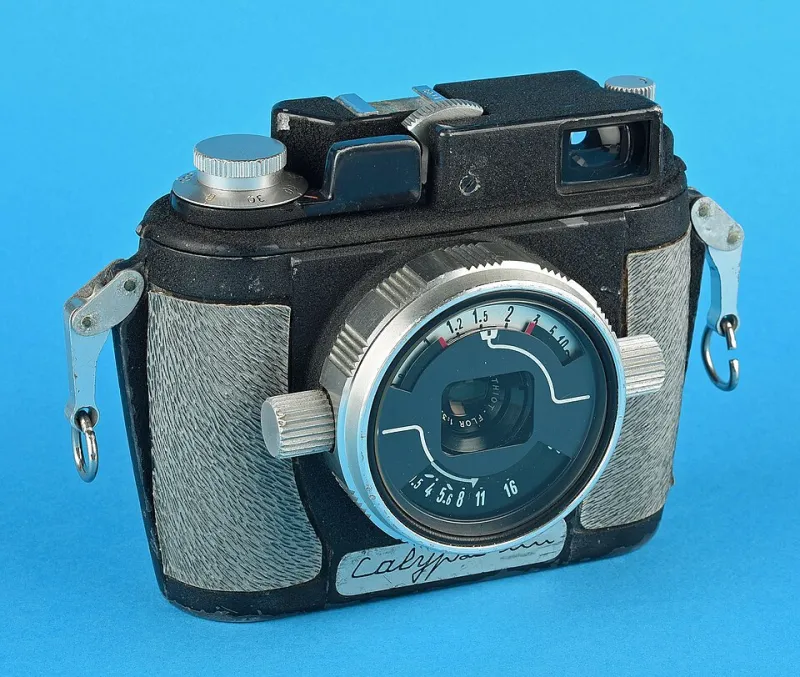
Photo: Bertrand Labévue, CC BY-SA 4.0, via Wikimedia Commons
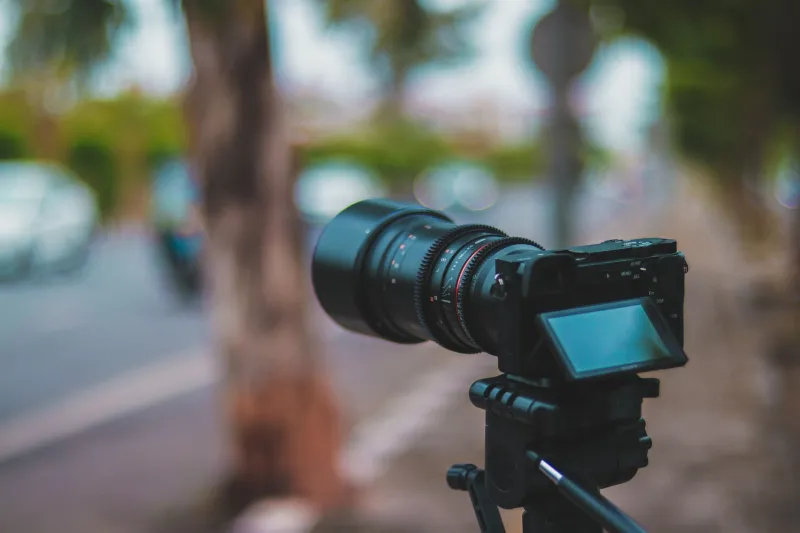
The rules were simple: one camera, one 35mm f/1.8, thirty days. No zooms, no swapping, no "just this once" with the phone (phone shots logged separately, but they didn't count). I live in Portland, so the experiment coincided with the tail end of gray-sky season — which, as it turned out, was the best possible stress test.
Week One: The Withdrawal Period
The first few days were pure friction. I hadn't realized how much I leaned on the lazy escape hatch of a zoom. Standing across the street from a mural, my instinct was to reach and compress. Instead, I had to walk. Cross the street. Get closer. Move left to get the power line out of frame.
And here's the thing nobody tells you: that walking is the lesson. Every step was an active compositional decision instead of a passive focal-length adjustment. My hit rate in week one was honestly mediocre — but my thinking per frame went way up.
Week Two: Learning the Field of View Like a Room
Somewhere around day ten, the lens stopped feeling like a constraint and started feeling like a pair of eyes. A 35mm (roughly 52mm full-frame equivalent on my crop body) is close to natural human vision, which means you start pre-visualizing frames before the camera comes up. I'd catch myself framing a shot of my neighbor's plum tree against a fence while still on the sidewalk, already knowing the lens would render it exactly as I saw it.
Low light stopped being a problem and became a style. Wide open at f/1.8, the rainy evenings turned into soft bokeh studies of taillights and diner windows. A zoom would have let me hedge. The prime forced commitment.
Week Three: The Frustration Is the Point
I won't romanticize all of it. At a friend's housewarming in a narrow Alberta Arts bungalow, I simply could not get the group shot I wanted — the room was too small, the lens too tight, and I ended up standing in the hallway shooting through a doorway like a creep. A 24mm would have saved me.
But that frustration is diagnostic. It teaches you which focal lengths you actually need and why. I now know, with real evidence instead of gear-lust, that a 24mm would earn its place in my bag — and that my 50mm barely would. That's information a spec sheet can't give you.
What Carried Over After the Experiment
Three habits stuck:
- Move your feet first. Even with a zoom now back in rotation, I compose by repositioning, not by twisting the ring. The zoom has become a fine-tuning tool, not a crutch.
- Commit to the frame. Knowing exactly what the lens sees means fewer "fix it in crop" files. My editing time dropped noticeably.
- Shoot the boring days. With one lens and no decisions to make about gear, the excuse to leave the camera home disappeared. Daily shooting became frictionless.
Try It Before You Buy It
Here's my pitch: you don't need to buy anything to run this experiment. Most entry-level kits include a normal prime or a kit zoom you can tape to a single focal length — literally put a rubber band on the zoom ring and treat it as a prime. Thirty days, one focal length, no exceptions.
Total cost: zero dollars. What you'll learn about light, distance, and your own habits is worth more than most workshops — and unlike a new lens, it can't depreciate.