The Case for Slow Lenses: Why That Budget f/5.6 Zoom Deserves a Second Look
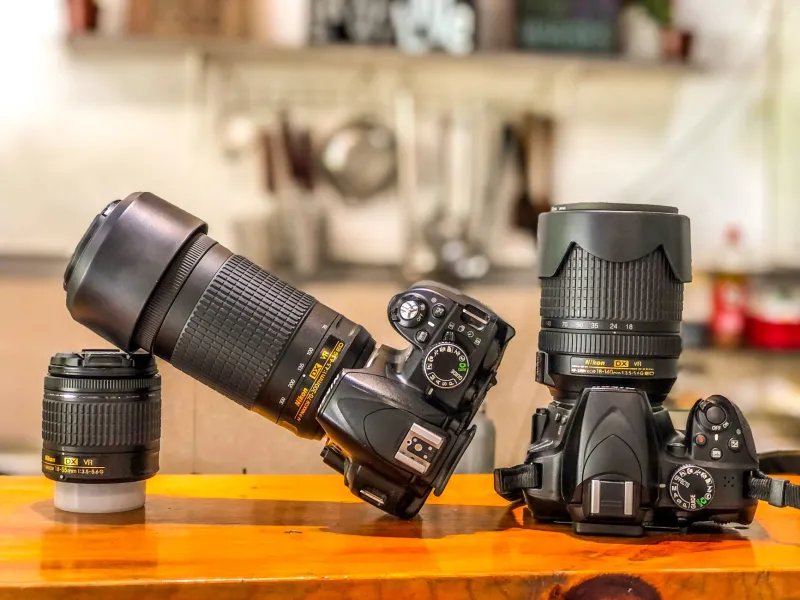
Walk into any photography forum and post a question about zoom lenses. Within minutes, someone will tell you that f/2.8 is the minimum acceptable aperture for serious work. That anything slower is a compromise. That real photographers shoot fast glass.
That's mostly nonsense—and it's costing photographers real money.
Slower aperture lenses, particularly in the f/4 to f/5.6 range, have been systematically underrated because the photography community treats aperture speed as a proxy for quality. It isn't. Here's a breakdown of why slower lenses deserve serious consideration, and which types consistently punch well above their weight.
Why Aperture Speed Gets Overrated
The f/2.8 obsession makes sense in specific contexts. Low-light event work, indoor sports, situations where you genuinely need to gather more light without pushing ISO sky-high—these are real use cases where fast aperture earns its price premium.
But the majority of photography doesn't happen in those conditions.
Landscape photographers shoot stopped down, usually between f/8 and f/16, to maximize depth of field and corner-to-corner sharpness. Wildlife and sports shooters are often outdoors in decent light where f/5.6 is entirely workable. Travel photographers prioritize portability. Portrait shooters frequently need more depth of field than f/2.8 provides anyway.
For all of these shooters, paying a significant premium for aperture speed they'll rarely use is a bad trade. And here's the part that stings: the slower, cheaper alternative is often optically sharper at the apertures they're actually using.
Sharpness Where It Actually Counts
Here's the optical reality: fast lenses are engineered to perform at wide apertures. That engineering is expensive, and it comes with tradeoffs—often including reduced sharpness and increased aberrations at those same wide-open settings.
A typical f/2.8 zoom might be soft and show noticeable fringing wide open. Stop it down to f/5.6 and it sharpens up considerably. Meanwhile, a lens designed with f/5.6 as its maximum aperture is already optimized to perform at that setting. It's not fighting its own optical design.
This means the f/5.6 lens is frequently sharper at f/5.6 than the f/2.8 lens is at the same aperture. You're paying extra for wide-open performance you may not even be using.
The Weight and Size Advantage Is Enormous
Fast glass is heavy. An f/2.8 zoom in a popular telephoto range can easily tip the scales at three pounds or more. The slower equivalent might weigh half that.
For photographers who travel, hike, or shoot for extended periods, this isn't a minor convenience—it's a fundamental difference in how you use your gear. A lighter lens means you actually bring it. A lighter kit means you walk further, stay out longer, and come home with more shots.
There's a well-worn saying in outdoor photography circles: the best camera is the one you have with you. The same applies to lenses. A slower zoom that lives in your bag because it's compact and light will always outperform the fast zoom sitting at home because you didn't want to carry it.
Specific Lens Categories Where Slow Glass Wins
Super-telephoto zooms: This is the most compelling argument for slower glass. Lenses in the 100-400mm or 150-600mm range with variable apertures around f/5.6-6.3 offer reach that would cost tens of thousands of dollars in a fast prime equivalent. For wildlife, sports, and aviation photography, these lenses are genuinely excellent optical performers that make the hobby financially accessible.
Standard kit zooms (done right): Not all kit lenses are created equal. Some manufacturers—particularly Fujifilm with their XF kit options and Canon with certain RF-mount offerings—have produced f/4 or even f/5.6 standard zooms with optical quality that legitimately rivals more expensive glass. The kit lens stigma is real, but it's not always deserved.
Telephoto primes at modest apertures: Lenses like classic 300mm f/4 options from major manufacturers have long been considered hidden gems. They're lighter than their f/2.8 counterparts, often sharper in real-world use, and dramatically more affordable. They're also more pleasant to handhold for extended periods.
Wide-angle zooms for landscape: When you're shooting landscapes stopped down to f/8 or f/11 anyway, an f/4 or f/5.6 wide zoom gives you everything you need at a fraction of the weight and cost of ultra-fast wide glass.
What You Actually Give Up
Fair is fair—there are real tradeoffs to slower lenses, and you should go in with clear eyes.
Autofocus performance in very low light can suffer. Some camera systems use the maximum aperture to determine AF precision, so an f/5.6 lens may struggle in dim conditions compared to an f/2.8. If you shoot indoor events, concerts, or low-light ceremonies regularly, this matters.
Background separation and that creamy bokeh look is harder to achieve at narrower maximum apertures. If shallow depth of field is central to your style, slower glass will limit you.
And if you genuinely work in dark environments often—sports halls, theaters, dim reception venues—the light-gathering advantage of fast glass is real and meaningful.
But for everyone else? The tradeoffs are mostly theoretical.
Rethinking Your Next Lens Purchase
Before you automatically reach for the f/2.8 option on your next lens purchase, ask yourself a few honest questions. How often do you actually shoot in conditions that require a wide aperture? How much do you value portability? Are you planning to shoot this lens wide open or stopped down?
If your answers suggest that a slower lens would cover ninety percent of your real shooting, then the premium for the fast version is buying you ten percent of use case at significant cost in both dollars and grams.
Slow glass isn't a compromise. Sometimes it's just the smarter choice.